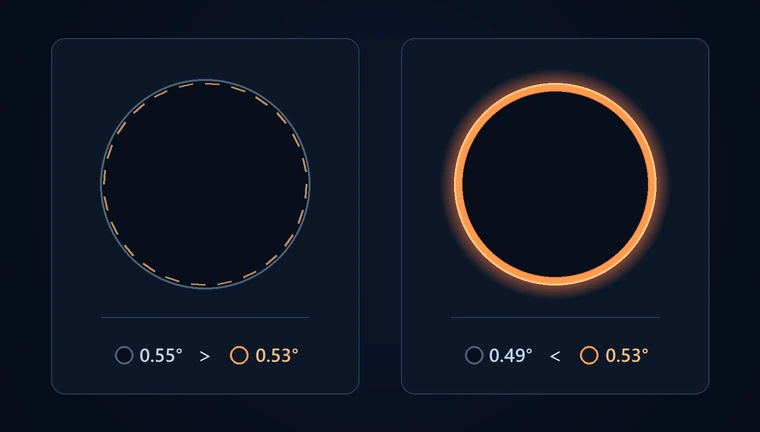
Why do the Sun and Moon look almost the same size?
Keep the Sun fixed and move the Moon along the same line of sight. A small change in distance can turn a total eclipse into a ring of sunlight.
Explore the evidence behind the science and history of the night sky.
Keep the Sun fixed and move the Moon along the same line of sight. A small change in distance can turn a total eclipse into a ring of sunlight.
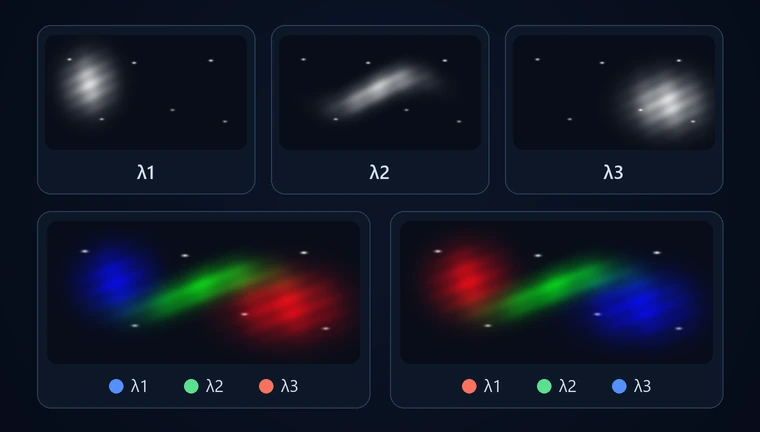
Start with three greyscale images. Give each a display colour, then swap two colours and see what changes.
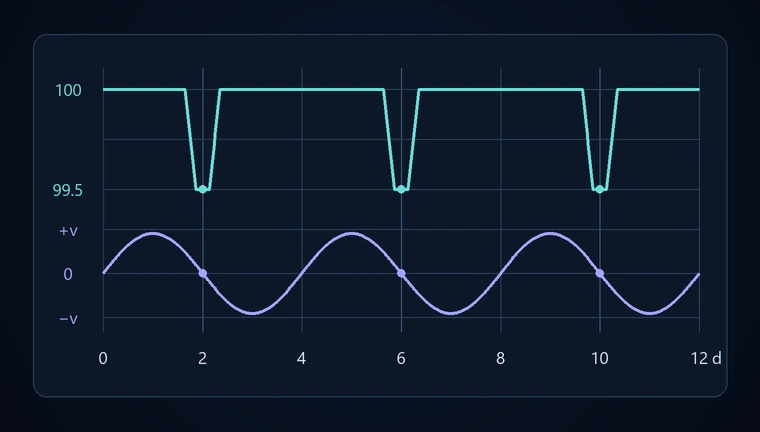
A repeating dip gives astronomers a testable prediction. A second measurement can help them work out what is making the light fade.
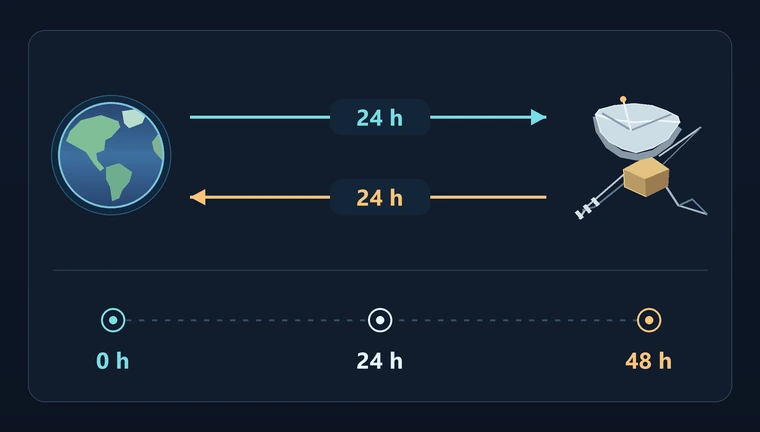
At one light-day from Earth, a command takes a day to reach Voyager 1. Even an immediate reply takes another day to get back.
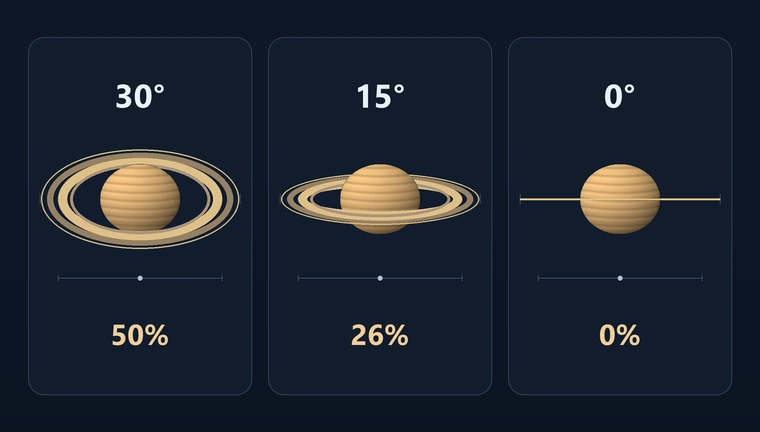
Look down onto the rings and their bands spread out around Saturn. Move the same view towards the ring plane and those bands narrow to a fine line.
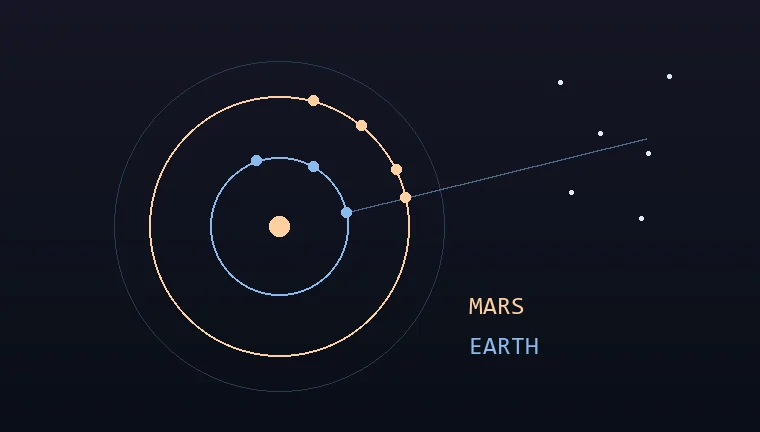
To see retrograde motion, compare Mars against the same background stars over several weeks.
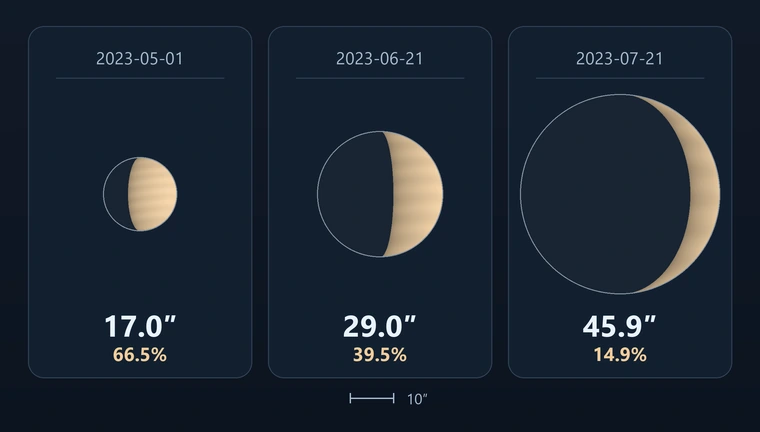
Follow Venus through three dates in 2023. As it approached Earth, its apparent disk grew to almost three times its earlier width while the illuminated portion narrowed to a crescent.
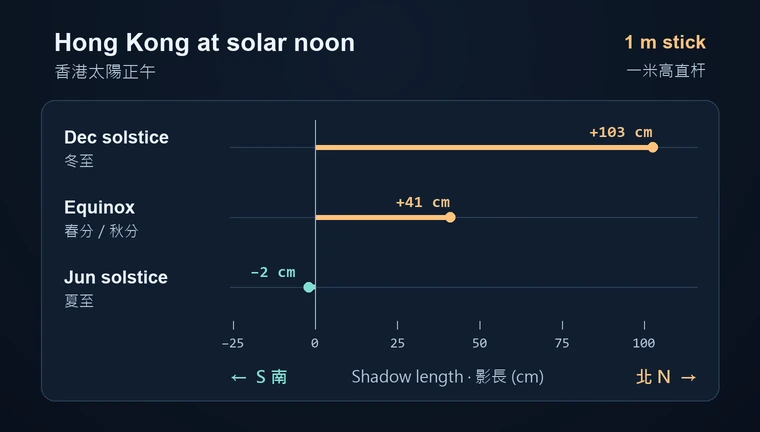
A one-metre stick in Hong Kong can cast a northward shadow longer than itself at the winter solstice. At the summer solstice the shadow is only about two centimetres long and points south.
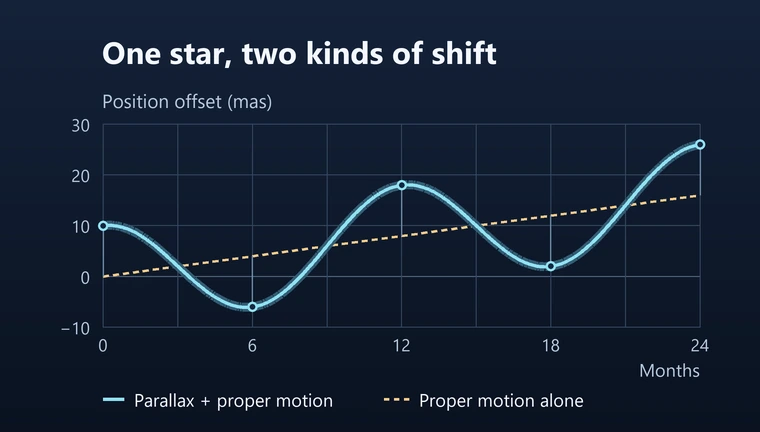
A nearby star seems to shift as our viewpoint moves around the Sun. Gaia used the size of that yearly shift to work out how far away the star is.
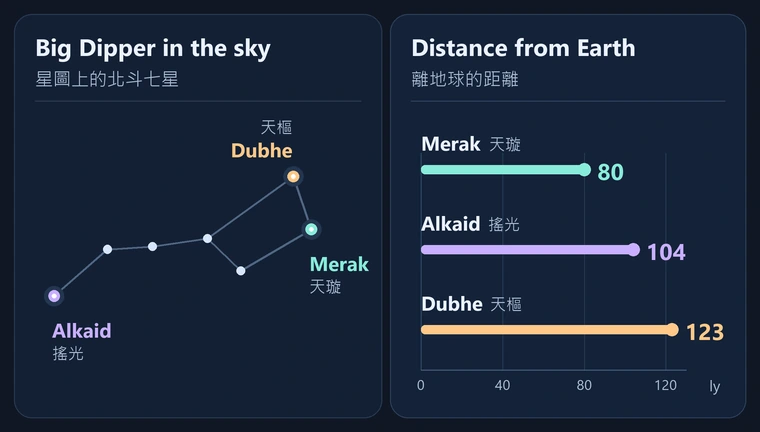
Merak and Dubhe sit next to each other in the Big Dipper’s bowl. Adding their distances to the star map puts them about 44 light-years apart in space.
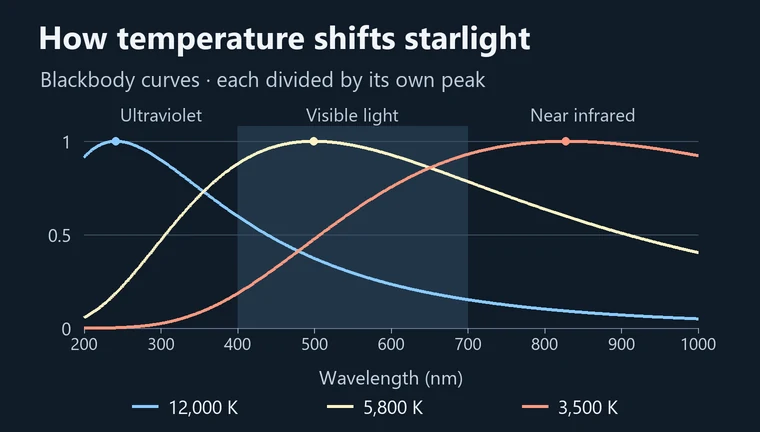
Compare the red-orange Betelgeuse and the blue-white Rigel in Orion. Their colours hint at surface temperature, and a simple spectrum shows how astronomers read that clue.