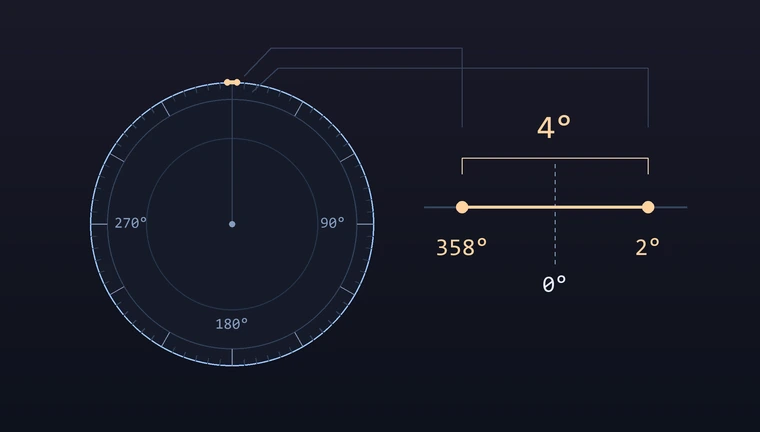
How to calculate a conjunction or opposition
Take the shorter route around the zodiac, then check how far the result is from 0° or 180°.
Read a chart, check the calculations, and understand the conventions behind it.
Read with discretion. Astrological interpretations of personality and houses are symbolic traditions. Astrology is not an exact science.
Take the shorter route around the zodiac, then check how far the result is from 0° or 180°.
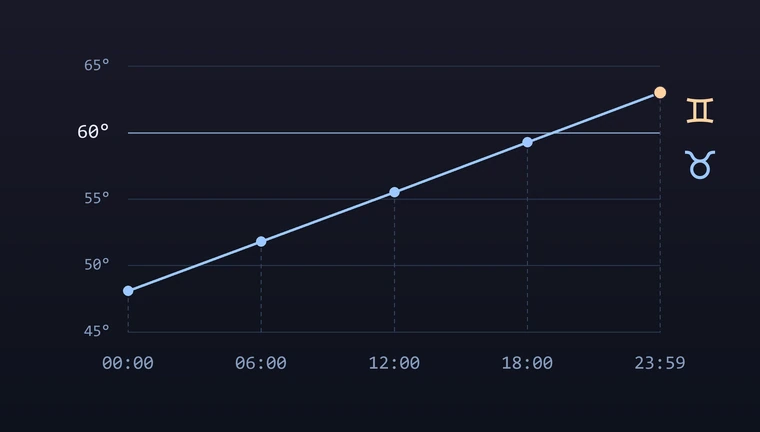
Try a range of plausible times and record which chart details change along the way.
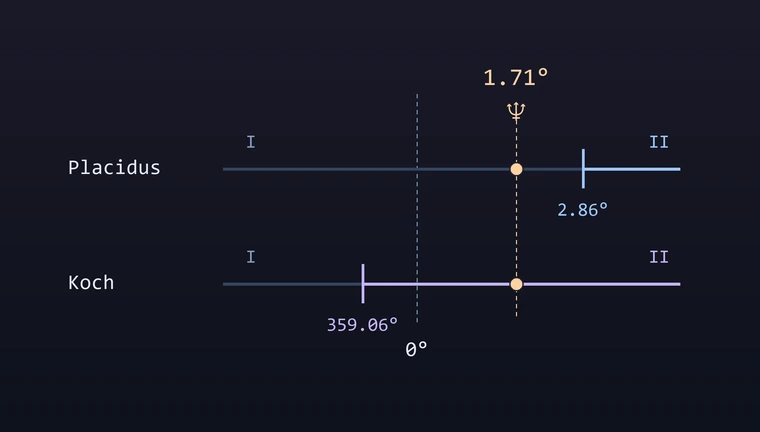
In a fixed chart, a house boundary can move past a planet. Find the one that changes Neptune’s house in this example.
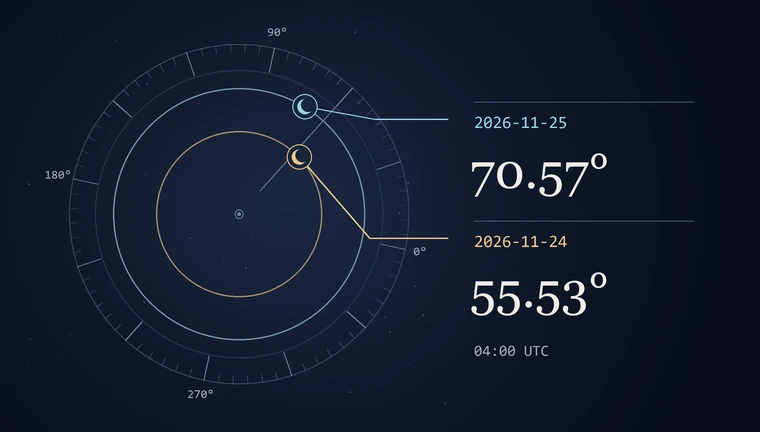
Keep the birth chart fixed and move the transit date by a day. The Moon shows which positions belong to each moment.
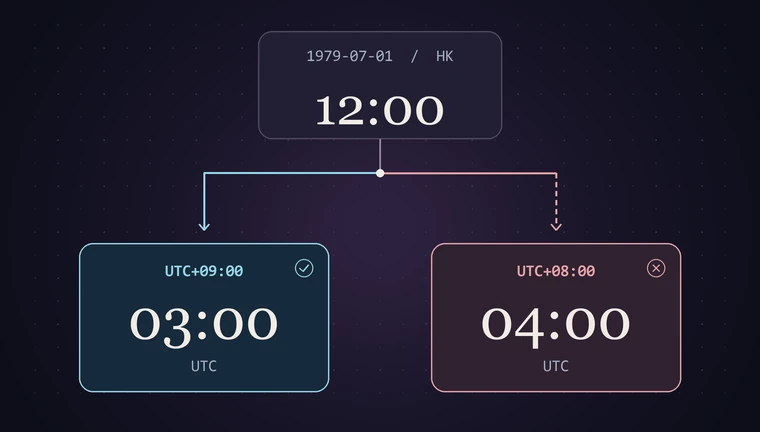
In Hong Kong on 1 July 1979, local noon was 03:00 UTC. Try the historical offset and see what a one-hour error does to the chart.
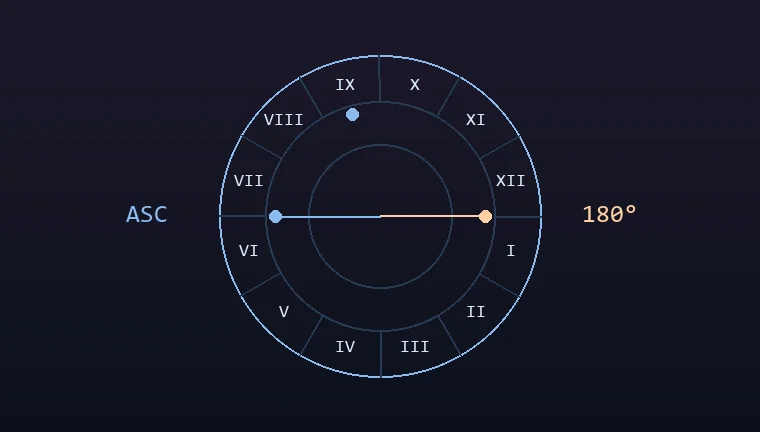
Begin with the Sun, Moon and Ascendant, then read houses and aspects one at a time.
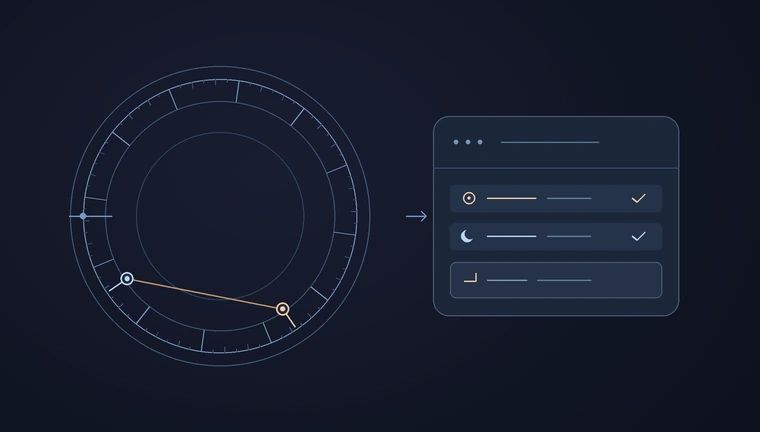
Start with a calculated chart, give the AI a few verified placements, and check what each part of its reading is based on.
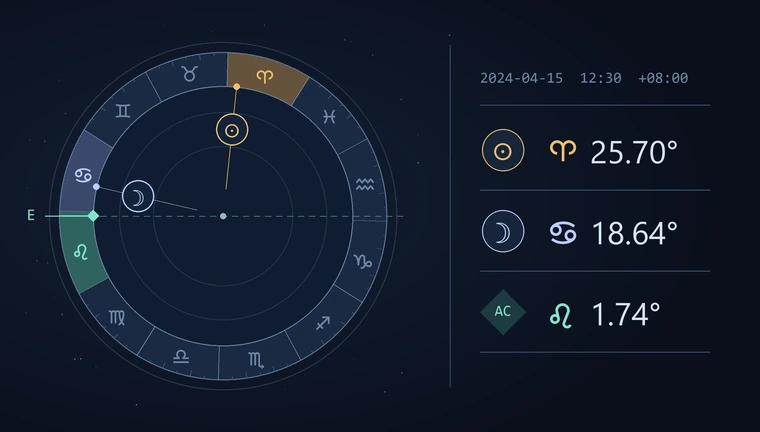
Find the three placements often called the ‘big three’ and see how changing the birth time can affect them differently.
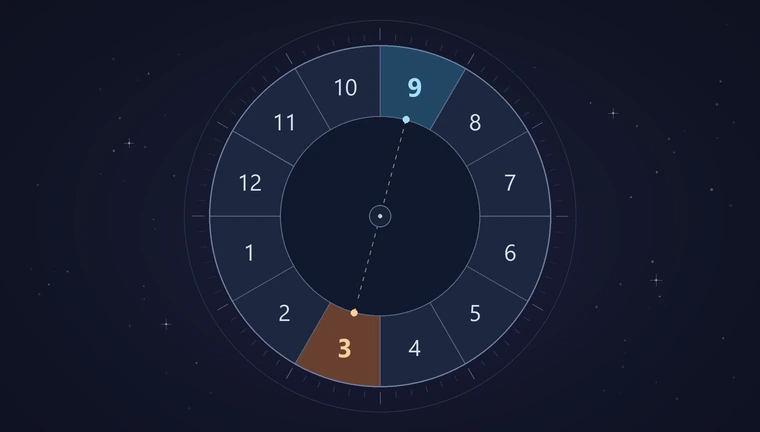
The numbered sectors of a birth chart connect planetary placements to topics such as home, work and relationships. Learn what each house represents in Western astrology and put the pieces together in a sample reading.
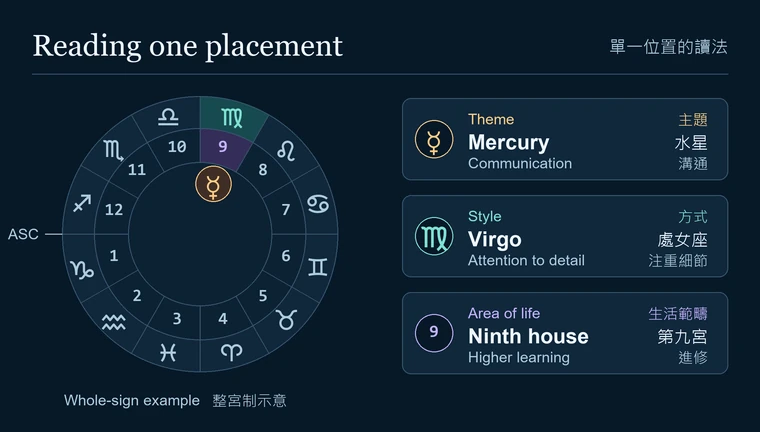
Mercury is associated with thinking and communication, Venus with attraction and values, and Mars with taking action. Learn what each body represents and how to combine it with a sign and a house.
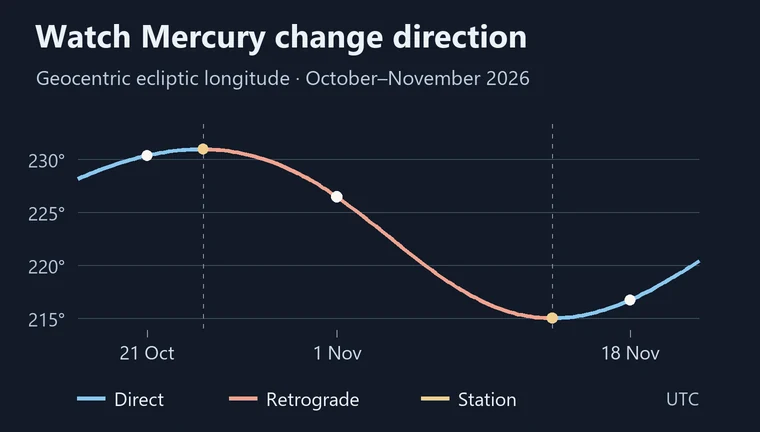
Follow Mercury across three dates and see when the ℞ mark appears. Then read it in a natal chart and in a transit chart, where the same mark refers to different moments.