A new search finds a pulsar in 15 years of Fermi data
Astronomers detected the isolated gamma-ray pulsar PSR J1622−7204, which spins about 261 times a second. A method inspired by cryptographic research helped them find the periodic signal in sparse observations already in NASA’s public archive.
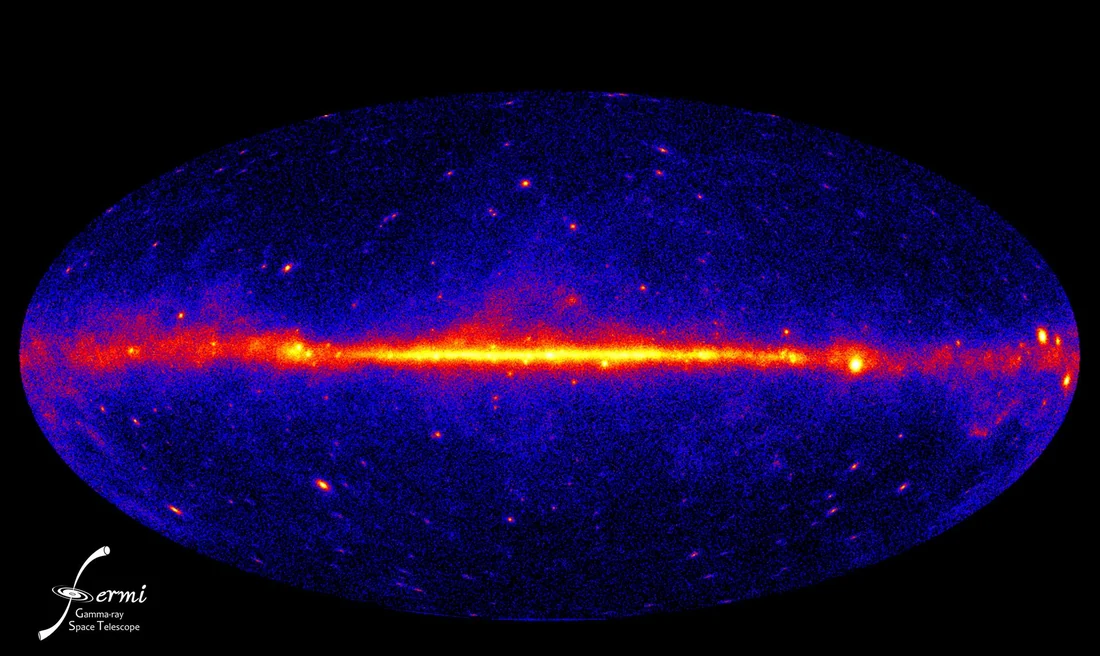
The Fermi Large Area Telescope detects only a small fraction of the photons emitted as a pulsar’s beam sweeps across Earth. The analysis has to account for the star’s position, how quickly it spins and how that rate changes. For a source already flagged in Fermi’s catalogue, the team used a geometric arrangement of points called a lattice to narrow the search for plausible timings. They found a candidate in the equivalent of roughly ten hours on one processor core and confirmed the pulse against the full dataset.
Starward perspective
An archive can yield discoveries years after the observations are taken when researchers find a better way to sift through it. The ten-hour figure comes from this isolated pulsar search. A binary companion adds orbital shifts to photon arrival times, giving the next searches more possibilities to test.